
Which psychological prices increase demand?
The way prices are presented not only influences immediate demand, but also consumption behavior and future purchases. Just as warm colors like red, orange, and yellow stimulate appetite in food businesses, certain numbers have a similar effect on price perception.
PSYCOLOGICAL PRICING
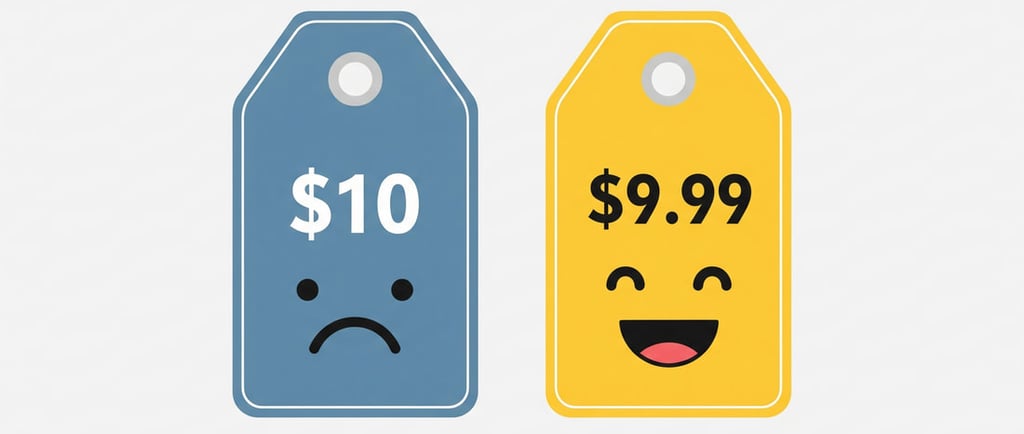
Although it may seem like a myth, it is widely demonstrated that prices ending in 9 or 99 generate a greater perception of savings. Even if the difference between $69 and $71 is insignificant in absolute terms, it can have a substantial impact on sales.
A 1987 University of Chicago study proved this: when the price of a margarine was reduced from 89 to 71 cents, sales increased by 65%. But when it was dropped even further, from 89 to 69 cents, sales tripled.
Another study in U.S. women’s clothing catalogs showed that prices ending in 99 generated an 8% increase in sales, not by attracting more buyers but because customers who did buy, spent more.
Why does this effect occur?
The most accepted explanation is that the brain tends to ignore the digits to the right of the price and rounds down. Thus, $19.99 is perceived as much lower than $24.99, even more than the difference between $20 and $25, although the real difference in both cases is $5.
When the first digits change, the difference between prices feels greater. This is why $9.99 is unconsciously perceived as much cheaper than $10, even though we rationally know they are almost the same.
The golden rule: reduce the first digit
If the goal is for the product not to appear expensive, the most effective strategy is to minimize the first digit. For example, a service offered at $7.10 per month will be perceived as more expensive than if offered at $6.99, even though the difference is less than 3%. This small change can result in significantly higher monthly revenue due to increased demand.
When should psychological pricing be applied?
Psychological pricing is most relevant in consumer markets, especially when the price is communicated directly to the end customer, as in the case of retailers. In these contexts, the cents and structure of the price do matter.
In contrast, manufacturers who sell through distributors have little control over the final price, so the use of psychological pricing is limited to suggested prices.
When it comes to B2B sales or industrial markets, where buyers make rational and analysis-based decisions, psychological prices lose their effect. Even if suggested prices ending in 99 are communicated, the impact will be minimal due to the logical nature of the purchasing process.
A look at the impact on consumption
So far, we have seen how the choice of digits in prices can influence purchase decisions. But the effect of prices goes beyond initial demand. It can also modify consumption of the purchased product or service and, with it, affect repeat purchases.
That will be the topic explored in the next analysis: how price influences product usage and repurchase behavior.
©2026, prexus pricing solutions
[email protected] | +57 (604) 204 3151
Cra 43A No. 1-50, Torre 1, Piso 6
Medellín, Colombia
Legal
Personal data processing policy
Terms and conditions
Information security policies