
Pricing market research
At prexus, we conduct market research studies specialized in pricing to measure value perception, price sensitivity, purchase intention, elasticity, and the preferences of B2B and B2C customers.
Conducting market research generally involves significant investments by the companies that commission it. The success of any market study depends on knowing exactly what to ask—and what not to ask.
At prexus, we offer the market research techniques necessary to effectively and cost-efficiently answer the following questions:
What segments exist in our potential market?
We use Cluster Analysis (machine learning) to identify the customer segments that exist in your potential market.
This allows us to detect groups of customers that are homogeneous within each segment, yet clearly differentiated from others.


What attributes do your customers consider when evaluating options in the market?
We use MaxDiff and Conjoint Analysis to identify the attributes that truly determine your target customers’ purchase decisions.
This allows us to define which features you should prioritize when designing your solutions or positioning yourself against competitors.


What is the importance of each attribute in your target customers’ purchase decision?
Conjoint Analysis quantifies the importance of each attribute in your target customers’ purchase decision process.
This allows us to estimate how each feature impacts customer preference and design solutions aligned with what truly matters to them.


What value do your target customers perceive in the solutions available in the market?
Conjoint Analysis allows us to estimate your target customers’ purchase intention across different attribute options.
These intentions are translated into scores that reflect the value customers assign to each option.


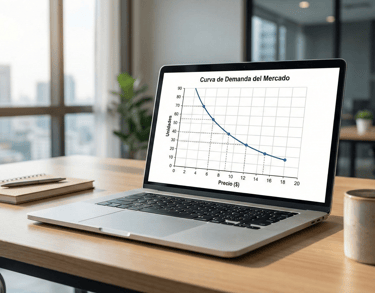
What is the price elasticity of demand in each of our target segments?
Through Conjoint Analysis and purchase intention studies, we estimate what proportion of customers would buy your solutions at different price levels.
This allows us to forecast demand in your target market and calculate price elasticity across price ranges.

Get a quote for your next pricing market research here…
FAQs
What is a pricing study and what is it used for?
A pricing study is a market research project designed to understand the behavior and preferences of target customers, including their value perception, price sensitivity, purchase intention, and the attributes that influence their decisions. It helps support decisions related to pricing, portfolio design, customer segmentation, and the launch of new solutions.
What decisions can a pricing study support?
A pricing study can support decisions such as setting or adjusting prices, designing new versions of products or services, prioritizing attributes, identifying customer segments, estimating price sensitivity, evaluating launches, and projecting how demand may change at different price levels.
What methodologies do you use in pricing studies?
We use quantitative techniques such as Conjoint Analysis, MaxDiff, Purchase Intention (Gabor-Granger), and Cluster Analysis. Conjoint Analysis measures the relative value and importance of a solution’s attributes; MaxDiff helps identify and prioritize the attributes that most influence purchase decisions; Gabor-Granger estimates purchase intention at different price levels; and Cluster Analysis identifies customer segments with similar behaviors and preferences.
What is Conjoint Analysis and how is it used in pricing?
Conjoint Analysis is a research technique used to estimate how much customers value different attributes and levels of a solution. In pricing, it is used to measure preferences, quantify the importance of attributes, estimate purchase intention, and evaluate how customer decisions change across different combinations of product, service, and price.
What is MaxDiff and what is it used for?
MaxDiff is a technique used to identify which attributes, benefits, or features are most and least important to customers. In pricing studies, it is used to determine which factors truly influence purchase decisions and which should be prioritized when designing a solution or comparing it with competitors.
What is Gabor-Granger and what is it used for?
Gabor-Granger is a methodology used to measure customers’ purchase intention at different price levels. It helps estimate what proportion of customers would be willing to purchase a solution at each price and analyze how expected demand changes as the price changes.
How is price sensitivity measured?
Price sensitivity is estimated by analyzing how customers’ purchase intention changes at different price levels. Depending on the objective of the study, prexus uses methodologies such as Gabor-Granger and Conjoint Analysis to project demand and calculate price elasticity across different segments or price ranges.
Can different customer segments be identified based on their price sensitivity?
Yes. Through Cluster Analysis and other statistical techniques, it is possible to identify groups of customers with different behaviors, preferences, and levels of price sensitivity. This makes it possible to design specific offers, prices, or commercial terms for each segment.
Are pricing studies useful for launching new products or services?
Yes. Pricing studies are especially useful before launching a new product or service, when there is not yet enough historical information available. They help estimate value perception, purchase intention, price sensitivity, and preferences across different solution configurations.
Can pricing studies be conducted when there is no historical sales data?
Yes. One of the advantages of pricing market research is that it allows companies to estimate preferences, purchase intention, and price sensitivity even when no historical sales data exists. This is particularly useful for new products or services, new markets, or categories that are still being developed.
How long does a pricing study take?
The design, execution, analysis, and presentation of a pricing study typically takes between 3 and 6 weeks, depending on the number of categories and surveys conducted.
What types of companies can benefit from pricing studies?
Pricing studies are suitable for companies operating in consumer (B2C) and industrial (B2B) markets that want to launch products or services, adjust the prices of existing solutions, or understand the purchasing behavior of potential customers in new markets.
Do the studies include practical recommendations?
Yes. All our studies include strategic and tactical conclusions designed to turn research findings into actionable measures related to pricing, portfolio design, segmentation, attributes, positioning, or the launch of new solutions.
©2026, prexus pricing solutions
[email protected] | +57 (604) 204 3151
Cra 43A No. 1-50, Torre 1, Piso 6
Medellín, Colombia
Legal
Personal data processing policy
Terms and conditions
Information security policies