
What determines your customers’ price sensitivity?
Value perception and price sensitivity are distinct but complementary concepts that explain why some customers are willing to pay more than others for the same product or service. Even within the same segment, some customers would not pay the same price, and this is due to several factors that influence their price sensitivity.
PRICE SENSITIVITY
The nine effects that explain price sensitivity
There are nine factors that help explain why customers react differently to prices.
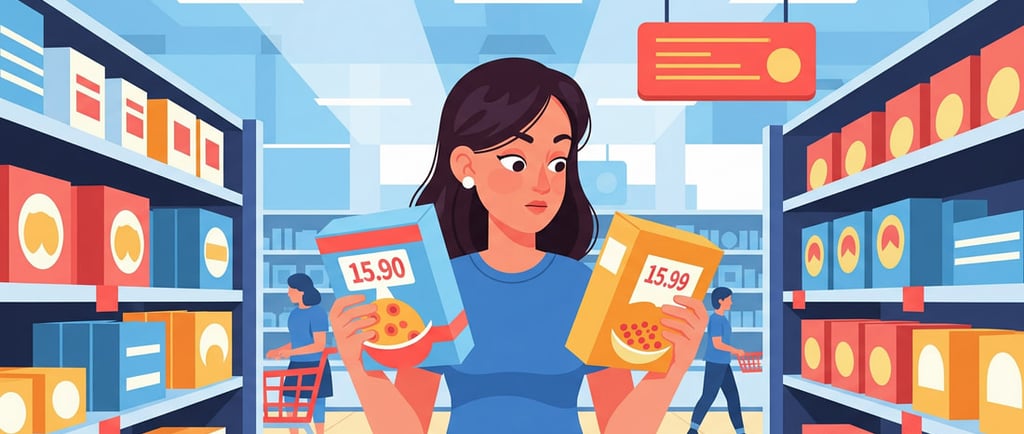
The first is the reference price effect. This occurs when customers compare the price of an offer with that of perceived substitutes. If the price is higher than these alternatives, their sensitivity increases. A clear example is generic medicines, which increase consumers’ price sensitivity toward branded products.
The second is the difficult comparison effect. Customers are less price sensitive when they cannot easily compare an offer with others available. Conversely, if comparison is easy, sensitivity increases. Advil, for instance, uses coated caplets to differentiate itself from generic tablets and make comparison more difficult.
The third factor is the switching cost effect. When switching brands or suppliers involves extra costs or loss of benefits, customers are less price sensitive. Loyalty programs, such as mileage accumulation, raise this switching cost and reinforce customer loyalty—even when cheaper alternatives exist.
The fourth effect is the quality-price effect. Customers are less sensitive when they associate a high price with higher quality. This effect is the opposite of perceived value, where a high price is justified by the value delivered. In this case, the high price is interpreted as a signal of quality. This is why someone unfamiliar with wine might assume that the most expensive bottle is also the best.
The fifth is the fair price effect. Customers react when a product’s price falls outside the range they consider fair based on the context. For example, a five-dollar soda may seem acceptable at the beach but unreasonable in a supermarket.
The sixth is the prospect effect. Buyers are more price sensitive when they perceive the price as a surcharge rather than a discount. Offering a volume discount is not the same as applying a per-unit surcharge. It is better to communicate a high price and offer conditional discounts than the reverse.
The seventh is the relative expenditure effect. This indicates that price sensitivity increases when the purchase represents a larger share of the buyer’s income. A farmer buying large quantities of herbicide will be more price sensitive than a hobbyist who buys only a small amount.
The eighth is the final benefit effect. Customers are more price sensitive when the product directly affects their economic benefit. Thus, even if two people buy the same amount of herbicide, if one earns a living from crops and the other simply enjoys gardening, the former will be much more price sensitive.
The ninth and final effect is the shared cost effect. The smaller the portion of the price the customer pays out of their own pocket, the lower their sensitivity. This explains why, in business dinners, those who are not paying directly tend to be less concerned about the price than those who bear the full cost.
Interaction of the effects
These nine effects do not operate independently. They can combine, and while some increase price sensitivity, others may reduce it. Understanding how they interact allows companies to design more effective pricing strategies tailored to each context and type of customer.
©2026, prexus pricing solutions
[email protected] | +57 (604) 204 3151
Cra 43A No. 1-50, Torre 1, Piso 6
Medellín, Colombia
Legal
Personal data processing policy
Terms and conditions
Information security policies