
What are the applications of regressions in pricing?
There are two types of artificial intelligence that can be applied to pricing decisions: expert systems and machine learning. Within machine learning, there are three types of algorithms relevant to pricing: regressions, supervised classification, and unsupervised classification.
MACHINE LEARNINGARTIFICIAL INTELLIGENCE
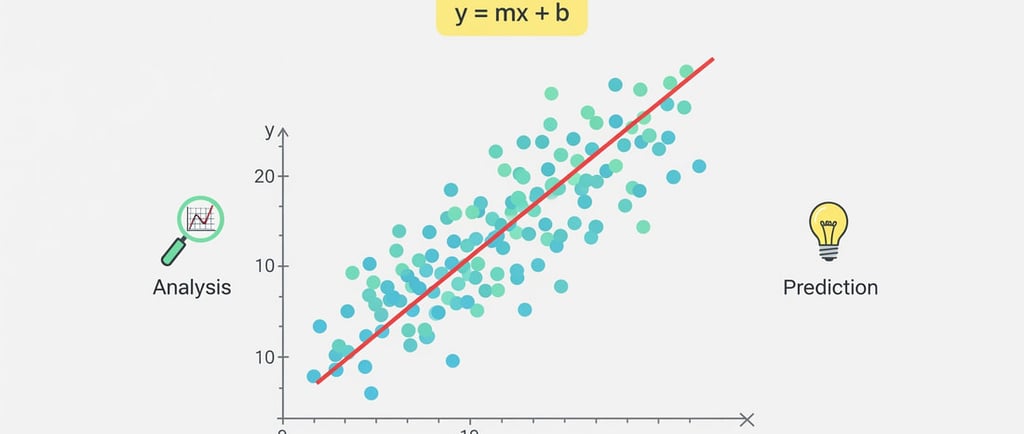
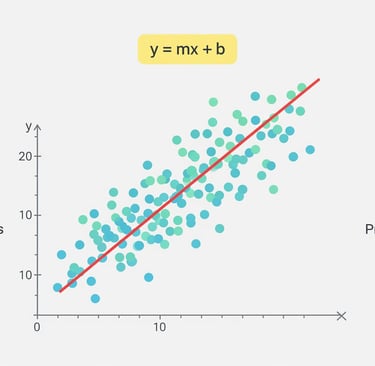
In this article we discuss regressions—especially linear regressions and neural networks—and their usefulness in the pricing context.
Using linear regression in pricing
Linear regression is used to predict continuous values from multiple input variables, assuming that a linear relationship exists between the inputs and the output variable.
In pricing, linear regression is useful for calculating price elasticity of demand using internal and market historical data. For example, a product manager may have monthly price and market share information for the last 20 months for their product and those of their two main competitors.
In this case, competitors’ prices and market shares are the input variables, while the company’s market share is the output variable. The manager wants to predict their market share if they increase the price to $13, assuming competitors’ prices and shares remain constant.
Using the statistical module of a spreadsheet, a prediction equation is obtained that includes the weight or coefficient of each variable. Applying this equation, the expected market share would be 11.8%. Then, based on the last known market share, a price elasticity of 1.2 is calculated.
Limitations of linear regression
Linear regression faces several practical challenges. First, it is not always possible to gather enough external information, such as competitors’ prices and market shares.
Second, many input variables included in the model may not actually be related to the output variable. This can lead to weak models supported by only a few relevant variables.
A third challenge is that relationships between variables are often not linear. Changes in an input variable do not always imply a proportional change in the output.
For these reasons, linear regression is not ideal for complex price optimization models. Its use should be limited to calculating elasticities that can then be leveraged by expert systems.
Neural networks for regression
Neural networks are also used to predict continuous values from large datasets. Unlike linear regression, they can model nonlinear relationships, making them more powerful for predicting sales or market share.
A typical neural network is composed of multiple “neurons,” which are regressions connected to each other. The input variables form the input layer, and the continuous variable to be predicted forms the output layer.
The ability to model complex relationships lies in the hidden layers, where the outputs of one layer become inputs for the next. This structure allows neural networks to overcome the linearity limitations of traditional regression.
Limitations of neural networks
Despite being more powerful, neural networks also have drawbacks. Their main limitation is the difficulty of interpreting the model, which can hinder adoption by decision-makers.
They also share limitations with linear regression. They require high-quality data on prices and sales, and their predictive performance depends on that quality. They are also susceptible to overfitting—that is, performing very well on training data but poorly on new data.
Conclusion
Linear regressions and neural networks allow predicting continuous values such as market share or sales from multiple variables. However, their application in pricing must consider practical constraints in data collection, the validity of relationships between variables, and model complexity.
When the goal is to predict purchase probabilities rather than continuous values, other machine learning models—such as supervised classification—are used. These will be explored later.
©2026, prexus pricing solutions
[email protected] | +57 (604) 204 3151
Cra 43A No. 1-50, Torre 1, Piso 6
Medellín, Colombia
Legal
Personal data processing policy
Terms and conditions
Information security policies