
Self-segmentation and pricing strategy
Companies do not segment their customers. Customers segment themselves according to their price sensitivity and the conditions they are willing to meet to access better discounts.
SEGMENTATION
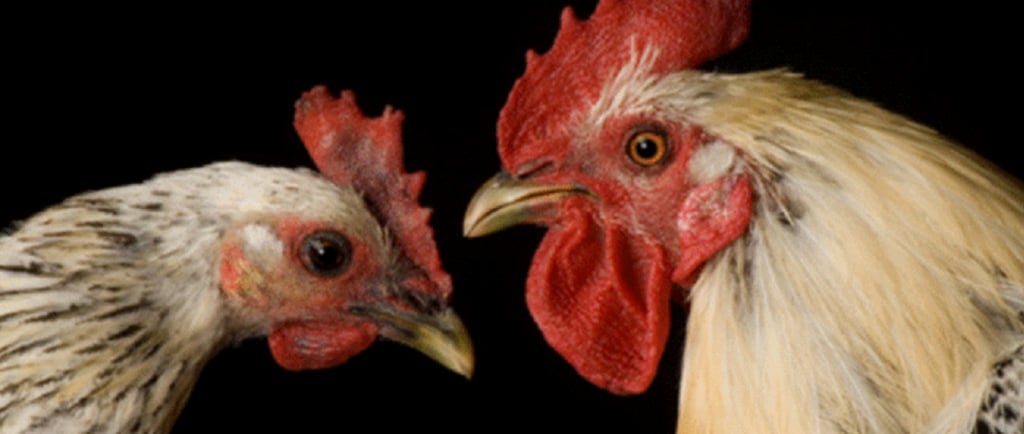
Many years ago, a national TV channel aired an animal program that perfectly illustrates a key element in any pricing strategy: self-segmentation. The program featured a chicken farm with an undetermined number of roosters and hens in the same barn. The goal was to provide ideal conditions for the roosters to naturally inseminate the hens. Traditionally, all birds were fed the same type of grain, but now the hens were to receive special feed to improve chick breeding. The farm owners faced a serious problem: how to prevent roosters from eating the hens’ food and vice versa? Given the large number of birds, daily separation was impractical. The solution was ingenious, exploiting differences in size and shape between roosters and hens. Roosters were tall with large heads; hens were small with small heads. Feeding trays were hung at heights reachable only by the roosters, while bars in the hens’ troughs allowed only the small-headed hens to access their feed. This way, the wide-headed roosters could not reach the hens’ feed.
Price Segmentation
This simple real-life example hides a powerful marketing concept for both consumer and industrial products and services. The barn owners did not need to know the exact number of roosters and hens or interact face-to-face with each bird. They only defined characteristics for each type of bird to determine the conditions required to access feed. Yet, both types of feed were technically “available” to all birds. The birds self-segmented based on the conditions they could meet to access the feed.
Applied to pricing strategy, these conditions and restrictions are called price segmentation barriers. They allow a company to serve customers with different price sensitivities: book early for a cheaper flight; attend the cinema on Tuesday instead of Friday; clip a cereal coupon for a discount on the next purchase, etc. There are six main types of price segmentation barriers, all based on self-segmentation: buyer identification, timing of purchase, place of purchase, purchase quantity, product design, and bundling.
Buyer Identification
The most basic tactic segments customers by getting them to identify as price-sensitive. Cinemas, museums, gyms, and other cultural/entertainment venues assume students and retirees are more price-sensitive due to lower incomes. Hence, they often offer discounts to these groups with proof of ID. However, this demographic correlation is not always accurate—some students or retirees are not price-sensitive, and not all working adults are insensitive. Some businesses do better by inviting self-segmentation. BodyTech gyms partnered with a cereal brand to print discount coupons on fiber cereal boxes. Customers concerned about fitness and willing to clip the coupon implicitly signal: “I am price-sensitive and took the effort to clip this coupon; I deserve a discount.” Cinemark, fast-food chains with street flyers, and others use similar tactics.
Timing of Purchase
The second tactic uses different purchase times to segment customers. Airlines know that last-minute buyers are often business travelers or urgent travelers, less price-sensitive than tourists booking months in advance for their family. Ticket prices are lower weeks before the flight and rise closer to departure. Telecom companies similarly offer discounts during off-peak hours; highly price-sensitive users adapt usage to access better rates.
Place of Purchase
The third tactic is the purchase location. Clothing outlets are intentionally placed away from cities to discourage less price-sensitive buyers. Supermarket formats of Grupo Éxito use location (among other tactics) as a segmenter. Pomona targets high-income shoppers seeking convenience, while Éxito locations cater to more price-sensitive middle-income buyers willing to sacrifice convenience.
Purchase Quantity
The fourth barrier is purchase quantity. Buyers become more price-sensitive the more they buy. A baker buying 30 kg of flour weekly cares more about deals than a housewife buying 0.5 kg per month. The baker shops at wholesale stores like Makro; the housewife may not, since bulk packaging is unnecessary.
Product Design
Product design is a highly effective price segmentation barrier. In the 1990s, Palm offered a range of PDAs. The Palm V had 2 MB memory at $300; the Vx had 8 MB at $450. Despite a cost difference of less than $2, the higher memory justified a $150 price difference. Early adopters needing memory bought the Vx; price-sensitive buyers opted for the V. Similar tactics are used in cars, mobile phones, appliances, insurance, and more.
Bundling
The sixth tactic is bundling products. Telecom companies, especially cable operators, often bundle TV and broadband at a lower total price than separately. This attracts marginal customers to one service via the other. For example, a customer with cable TV and broadband may switch broadband providers for a lower combined price if price-sensitive; those less sensitive continue paying separately.
In Summary...
Companies do not segment their customers. Customers self-segment based on price sensitivity and conditions they are willing to meet to access better discounts. In mass markets, there are countless “roosters and hens,” but it is impossible for a company to identify them all to know what feed to provide. What companies can do is understand behavioral differences to impose conditions and restrictions in value propositions, allowing customers to self-segment: all potential customers have access to all products or services, but they ultimately decide what sacrifices they are willing to make to access better prices.
©2026, prexus pricing solutions
[email protected] | +57 (604) 204 3151
Cra 43A No. 1-50, Torre 1, Piso 6
Medellín, Colombia
Legal
Personal data processing policy
Terms and conditions
Information security policies