
Pricing strategies for difficult times
The only difference between a market in recession and one that is not, is that in the former the proportion of highly price-sensitive customers is much higher. This means that the key to making money in a depressed market lies in the ability to profitably serve the segments that are least willing to pay.
PRICE SETTINGCOSTSPRICE SENSITIVITYPERCEIVED VALUE
Some time ago, during a conference I was giving at the sales convention of a large multinational in the construction sector, an executive asked me what pricing strategy was recommended for serving a market in recession. First of all, it is important to clarify that the topic of my presentation was about the use of pricing strategy within the value-creation process of companies. The general message was that before defining how much to charge for something, you must first know what you are going to sell and to whom you are going to offer it. The commercial executive’s question was whether, in times of crisis, this approach was still valid. My answer: the only difference between a market in recession and one that is not, is that in the former the proportion of highly price-sensitive customers is much higher. This means that the key to making money in a depressed market lies in the ability to profitably serve the segments that are least willing to pay. And although the following story does not take place in a recessionary market, I believe it illustrates the importance of knowing how to serve the most price-sensitive segments.
The story of the Ford Mustang
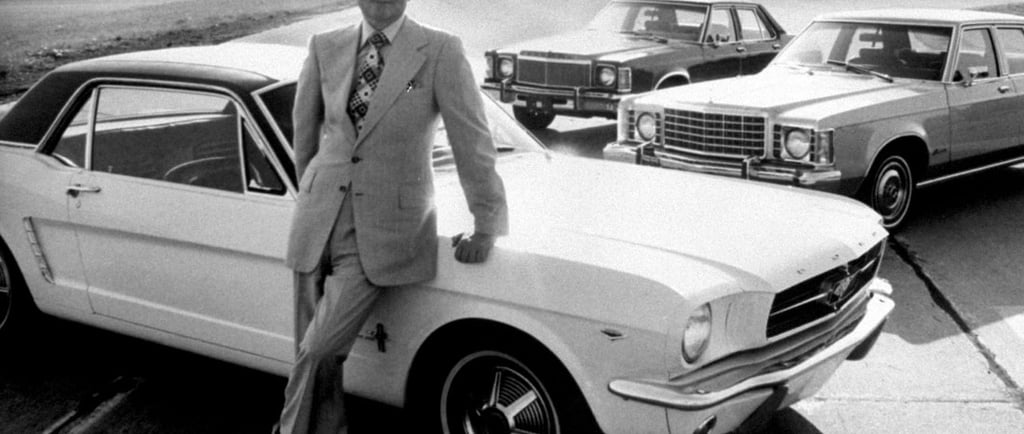
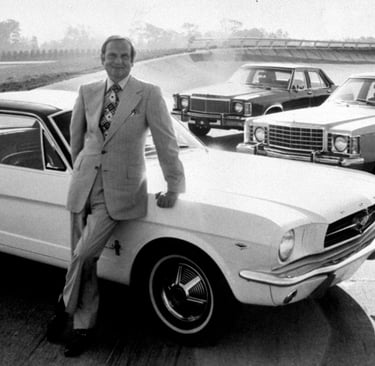
In the early 1960s, Lee Iacocca was Vice President and General Manager of Ford Motor Company. The company was not doing well. Sports cars were in fashion, and Ford could not compete at that time against General Motors and European manufacturers in terms of the best sports car. That’s when Lee Iacocca realized there was a huge segment of customers eager to own a sports car. The broad American middle class could not afford the high prices of a Corvette or an Alfa Romeo, but neither did they want their performance. They wanted only a sporty-looking car, even if it didn’t perform like one. It needed bucket seats, a floor-mounted shifter, but not necessarily the most powerful engine. Lee Iacocca realized that to satisfy this large market it wasn’t necessary to have the best sports car, but the cheapest. And so a design process began that emphasized appearance over performance. By building a beautiful body with an economical sedan engine, Ford was able to launch in 1964 a sports car that fully satisfied the needs of this attractive segment, for a price under US$2,500: the Ford Mustang, the best-selling sports car in U.S. history.
Do not over-engineer solutions
This case leads to two conclusions about how to serve highly price-sensitive segments, of which recessionary markets are an example. First, for a company to offer a product or service at a sufficiently low price, it must be able to produce it profitably. But how do you satisfy customer needs while selling at low prices profitably? The best way is by eliminating attributes that are not relevant or valued by the most price-sensitive customers. The idea is to identify the attributes that are not perceived as added value by these customers and remove them from the offering so they do not become an “added cost” for the company. In the case of the Mustang, by recognizing what the American middle class wanted —sporty appearance— and what they did not want —performance— Ford was able to significantly reduce costs by using an economical engine.
Price segmentation
The second conclusion that can be drawn from the Ford Mustang case is that when serving highly price-sensitive segments, you must avoid selling cheaply to less price-sensitive customers. Launching the Mustang as a sports car for the middle class did not mean abandoning the premium segment of the category. Ford was already competing there with the famous Thunderbird, aimed at lovers of large sports cars with powerful engines and luxurious interiors, at a much higher price. How did Ford ensure that high-value customers were not attracted to the cheaper Mustang? Quite simply, the price–value relationship was not attractive for them. The Mustang did not offer what they sought in a sports car: the low engine power and the poor interior accessories prevented them from switching to the new budget model.
In summary...
Being able to profitably serve the most price-sensitive segments is key when the majority of the market behaves that way. And economic crises make most categories fit this condition. It is therefore crucial to remember that, to set the right price, it is necessary to identify the attributes that customers truly value, to avoid the mistake of charging them for something they are not expecting.
©2026, prexus pricing solutions
[email protected] | +57 (604) 204 3151
Cra 43A No. 1-50, Torre 1, Piso 6
Medellín, Colombia
Legal
Personal data processing policy
Terms and conditions
Information security policies