
How does competitive strategy affect pricing decisions?
The choice of a competitive strategy directly influences a company's pricing decisions. This relationship depends on the nature of the product or service, the cost structure, and—above all—the type of customers the company wants to attract.
COMPETITIVE STRATEGYPROFITABILITY
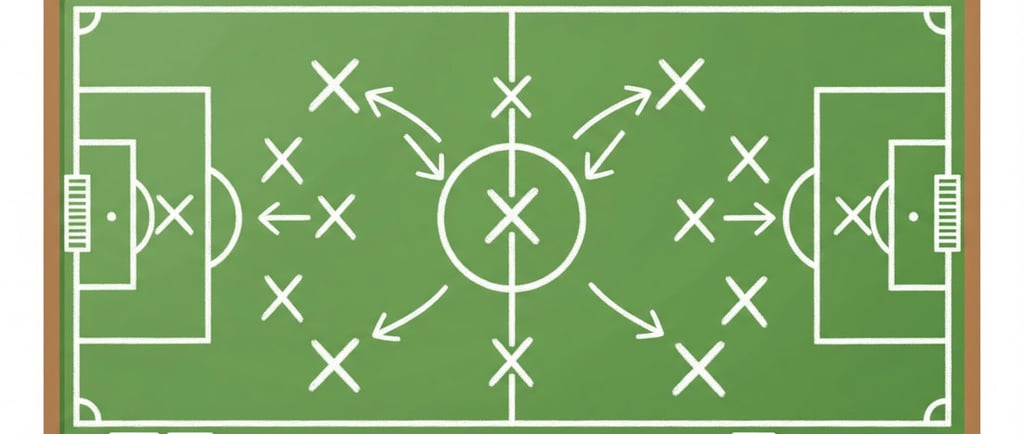
Three ways to compete
According to Michael Porter, there are three basic strategies for competing: cost leadership, differentiation, and focus. The choice depends on two variables: whether our solutions are better than the competition's, and whether we aim to serve a broad market or a more specific one.
When products are not better than the competition and the goal is to serve a broad market, customers will only prefer us if our prices are more attractive. In contrast, if products are superior and the market is broad, customers will choose us because of the quality of our solution.
Finally, when serving a narrow segment, preference depends on how well we satisfy the specific needs of that niche—either by offering a superior product or a better price.
When to adopt cost leadership
This strategy makes sense when the company has capabilities that enable economies of scale, economies of experience, or access to cheaper resources.
Economies of scale reduce unit cost when many units are produced in a given period. Economies of experience arise when time and repetition lead to operational efficiency. It’s also an advantage to have access to cheaper inputs, services, or labor than competitors.
From a cost-structure perspective, this strategy works best when fixed costs are high. It also fits markets composed mainly of price-sensitive buyers, such as price and value buyers.
When to adopt differentiation
Differentiation is suitable when a company can deliver a superior value proposition—through innovation, better marketing and commercialization, or stronger customer service.
This strategy works in both fixed and variable cost structures, but requires a market with customers who have high value perception, such as value and relationship buyers.
When to adopt a niche focus
A niche strategy is ideal when the company has deeper customer knowledge or greater flexibility to adapt to specific needs.
From a cost standpoint, if the niche is very small, it is preferable to have a structure dominated by variable costs to avoid spreading fixed costs across too few units. This strategy can apply to any of the four buyer types, regardless of their price sensitivity or value perception.
Price levels
There are three price levels relative to the market average: neutral prices, skimming prices, and penetration prices.
Neutral prices align with the market average for functionally equivalent solutions. Skimming prices are above the average; penetration prices, below.
Crossing these price levels with competitive strategies yields different approaches.
A differentiated company targeting a niche must apply skimming prices because not all customers will pay a premium. But if it aims for a broad market, it should use neutral prices, similar to the market average.
A cost-leadership company can use neutral prices if there is a non-price reason to capture a niche. If it wants to reach a broad market, it must use penetration prices.
Profitability is non-negotiable
Regardless of the competitive strategy, prices must be profitable. Understanding price levels and their alignment with strategy helps make better commercial decisions. However, defining the right prices also requires a solid understanding of which costs matter—addressed in the next section.
©2026, prexus pricing solutions
[email protected] | +57 (604) 204 3151
Cra 43A No. 1-50, Torre 1, Piso 6
Medellín, Colombia
Legal
Personal data processing policy
Terms and conditions
Information security policies