
Controlling retail prices
Getting all distributors to sell our products at the same price does not seem possible. Not even Apple is immune to this phenomenon. How can such situations be minimized then?
PRICE CONTROLSDISCOUNTS MENUDISTRIBUTION CHANNELS
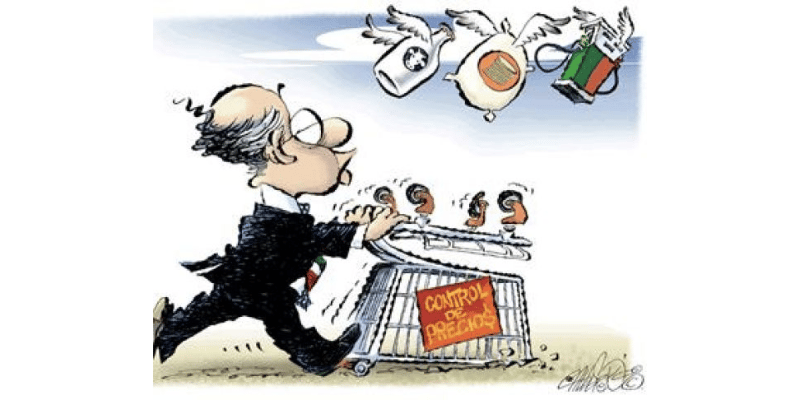
Executives at a major consumer goods company wondered how they could control the retail prices of one of their flagship brands. They were concerned because their products were being sold on the street at prices very different from those they suggested in mass media, especially in the store-to-store channel.
For several years, they had implemented a rigorous price audit process in the traditional channel, which cost them half a million dollars per year, but had proven ineffective in controlling the high price disparity. Even communicating the suggested retail price on the packaging had not worked. Was it possible to ensure that their suggested retail price (SRP) was respected in all stores? Were they failing in the arguments they used to convince store owners to adhere to the suggested price?
Reasons to control prices
There are two reasons why a manufacturer would want to control retail prices. First, because they feel that distributors are selling above the suggested price, thereby affecting their sales volume. Second, because the manufacturer considers that some of their clients are selling below the suggested price, thereby affecting their relationship with other distributors.
In both cases, there are no legal mechanisms that allow a manufacturer to force a distributor to sell products at a certain price. Additionally, it makes no sense to wear oneself out trying to convince them to change retail prices if they find economic incentives to sell at a different price. This is why, if one wants to minimize the deviations that naturally exist in the market, one must work on those economic incentives so that channels behave as the manufacturer desires.
Channel competition
The first problem is relatively easy to solve. The reason a distributor sells the manufacturer’s products at an excessive price is simply because they can. Yes, because they can. And this generally happens when the distributor faces little or no direct competition in the market. In this way, the distributor knows that by selling at a higher price they will make more money, even if they sacrifice some units.
But in this situation, the real loser is the manufacturer, who sells fewer units at the same price. To correct this distortion, the manufacturer must increase competition among their channels by developing more distributors. This way, none of them can afford to raise their prices excessively, as they would lose a large portion of their sales to competitors.
Functional discounts
The second problem is a bit more complex to solve but equally achievable. As in the previous case, the reason a distributor sells the manufacturer’s products below the market’s average price is simply because they can. This usually occurs when the distributor buys from the manufacturer at the same price as the rest of their competitors but, having a lighter cost structure, is able to sell to their customers at a lower price. Distributors with lighter cost structures generally perform fewer functions than their peers: less display, less inventory, less after-sales service, etc.
To eliminate the disadvantage faced by distributors who perform more functions, the manufacturer should compensate their channels to the extent that they perform functions the manufacturer wants them to. This practice is called “functional discounts,” and it helps create equity in the commercial conditions offered to distributors, ensuring that no channels have an advantage over others.
In summary...
Getting all distributors to sell our products at the same price does not seem possible. Not even Apple is immune to this phenomenon. But this should not be a cause for concern for manufacturers; a certain level of deviation in retail prices is not necessarily harmful.
Trying to control retail prices through coercive actions is not only costly but also useless. The best way to correct unhealthy price distortions in the market is by acting on the economic incentives that distributors find to sell at prices different from those the manufacturer considers reasonable.
©2026, prexus pricing solutions
[email protected] | +57 (604) 204 3151
Cra 43A No. 1-50, Torre 1, Piso 6
Medellín, Colombia
Legal
Personal data processing policy
Terms and conditions
Information security policies